Building a Greener Future: How Sustainable Trade Show Booths Save the Planet and Your Budget
A real booth case study showing how sustainability and innovation pair up — 100% recyclable carpet, reusable Matrix frames, post-consumer plywood, digital signage, and renting vs. owning AV.
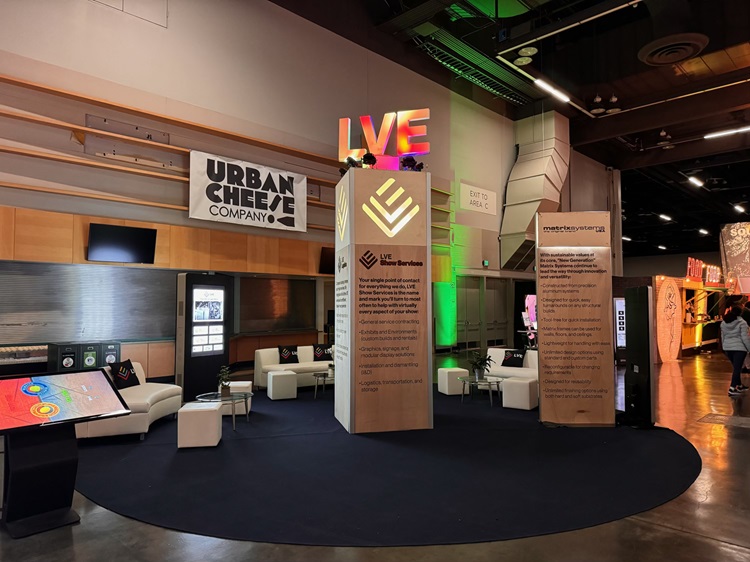
As companies look to reduce their environmental impact, even trade shows are embracing sustainable practices. A recent booth we developed exemplified how sustainability and innovation can go hand-in-hand — eco-friendly and cost-effective at once. Here’s how we implemented sustainable solutions, and the environmental and financial benefits of those choices.
1. 100% Recyclable Carpet. Conventional carpeting often ends up in landfills after the event. For our booth, we opted for 100% recyclable carpet that could be reused in future shows or repurposed by manufacturers — a greener alternative to the usual disposal practices.
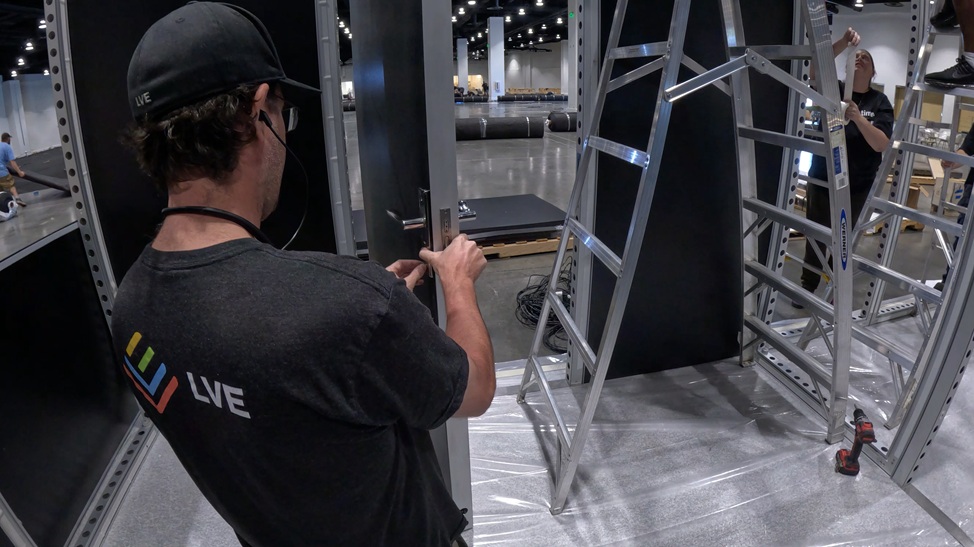
2. Lightweight, Reusable Matrix Frames. Our Matrix frames are lightweight, flexible, and reusable, made from durable materials transported and assembled with minimal energy or waste. Designed to be used repeatedly, they reduce environmental impact and transportation costs and emissions.
3. Post-Consumer Plywood. Instead of new wood, we used post-consumer plywood — recycled and repurposed — and laser-etched our marketing messages onto it, eliminating printing. After the show, the plywood was transformed into crates to ship booth materials for future events, closing the loop on waste.
4. Digital Signage. Rather than Sintra or fabric, we incorporated digital signage to display dynamic content without waste — minimizing the carbon footprint of producing and discarding printed materials, and offering a more versatile, cost-effective solution.
5. Renting vs. Owning. We chose to rent AV and furniture rather than buy outright. Rented items are reused across multiple events, reducing carbon footprint and cutting the cost of purchasing and maintaining equipment used only briefly.
The most striking outcome was the minimal increase in overall cost — slight upfront expenses offset by long-term savings. By reducing waste and improving efficiency, we contributed to corporate social responsibility without sacrificing budget. Every step counts in making trade shows more sustainable.